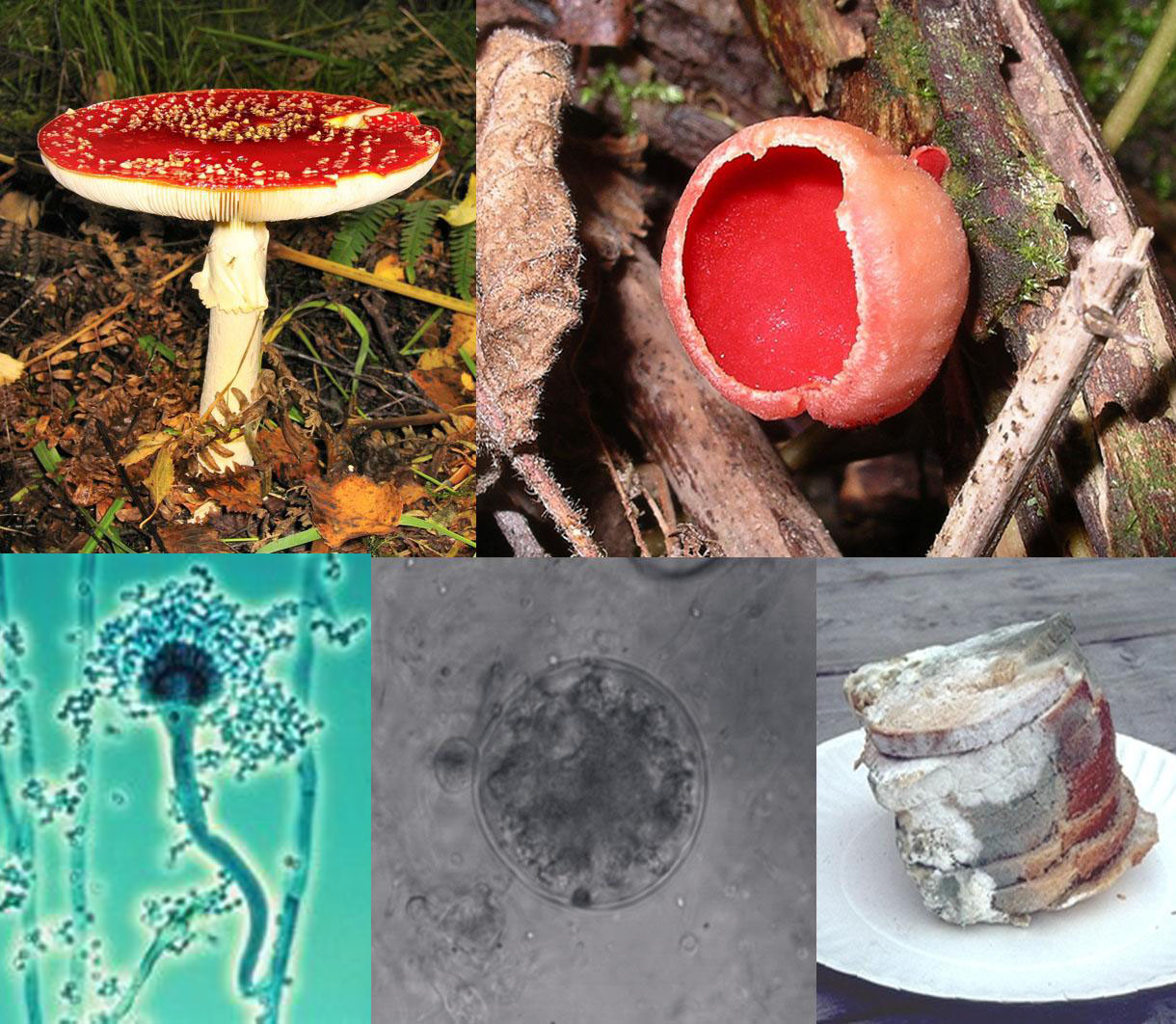
The Unseen Architects of Ecosystems: Fungi and Their Recycling Prowess
Fungi, often overlooked in the grand scheme of biodiversity, are in fact the unsung heroes of nearly every terrestrial ecosystem on Earth. These incredible organisms play an indispensable role in nutrient cycling, decomposition, and carbon sequestration, fundamentally shaping the health and resilience of our planet. Without them, forests would be choked with undecomposed plant matter, and vital nutrients would remain locked away, inaccessible to new life. Understanding the intricate *fungi recycling strategies* they employ is not just an academic exercise; it's crucial for addressing global challenges like climate change and biodiversity loss.
From the microscopic yeasts fermenting our bread to the expansive mycelial networks spanning acres beneath forest floors, fungi exhibit an astonishing diversity of forms and functions. Their primary ecological niche, however, often revolves around their unparalleled ability to break down complex organic compounds. Lignin and cellulose, the tough components of plant cell walls, are notoriously difficult to degrade, yet fungi possess the enzymatic machinery to dismantle them, releasing carbon, nitrogen, phosphorus, and other essential nutrients back into the soil. This process is the very engine of nutrient cycling, making fungi key players in maintaining soil fertility and supporting plant growth.
Consider the vast carbon stores held within forests. Much of this carbon is locked in dead wood and leaf litter. Saprophytic fungi, a major group among the decomposers, actively engage in the breakdown of this organic matter. Their sophisticated *fungi recycling strategies* prevent carbon from accumulating indefinitely on the forest floor, instead facilitating its gradual release and cycling, some of which returns to the atmosphere, but much of which is integrated into the soil as organic matter, enhancing its capacity to store carbon over the long term. Mycorrhizal fungi, forming symbiotic relationships with plant roots, also contribute significantly by improving nutrient uptake for plants, which in turn boosts plant growth and, consequently, carbon capture from the atmosphere. Understanding these diverse strategies – from enzymatic degradation to symbiotic nutrient exchange – is paramount to predicting and managing ecosystem responses to environmental change.
The Challenge of Frameworks: Why Macro-Organism Models Fall Short
Despite their critical ecological roles, our ability to understand, predict, and manage fungal communities has been hampered by a lack of a comprehensive, fungi-specific ecological strategy framework. While high-throughput sequencing technologies have revolutionized our understanding of fungal diversity and distribution, revealing an astonishing array of species and genetic potential globally, integrating this raw data into a cohesive ecological theory has proven challenging.
The problem lies partly in the traditional approach to ecological strategy theory, which has largely been developed for macro-organisms like plants and animals. Concepts such as Grime's CSR (Competitor, Stress-tolerator, Ruderal) strategy or Tilman's R* (resource ratio) theory, while powerful for their intended subjects, struggle when directly applied to fungi. Why? Fungi possess several unique ecological traits that defy easy translation:
*
Body Size and Growth Architecture: Unlike plants or animals with discrete bodies, fungi often grow as diffuse, filamentous mycelial networks. A single "individual" can be massive and widely dispersed, making traditional measures of size, competition, or reproduction difficult to apply. Their growth is indeterminate and highly plastic, adapting to substrate availability.
*
Guild Shifting and Trophic Flexibility: Fungi are notorious for their ecological plasticity. A single species might act as a saprophyte (decomposer) under certain conditions, a pathogen under others, and even form mycorrhizal associations. This "guild shifting" makes static categorization difficult and requires a dynamic understanding of their ecological roles.
*
Lack of Observable Trait Shifts: For macro-organisms, scientists can often observe clear shifts in traits (e.g., leaf size, growth form, reproductive output) across different environmental gradients. This kind of data, crucial for building strategy schemes, is largely absent or difficult to collect for fungi, whose traits are often hidden within substrates or expressed at a microscopic level.
*
Hidden Interactions: Much of fungal ecology occurs belowground or within host tissues, making direct observation of interactions, competition, and resource acquisition incredibly complex.
These unique aspects highlight why an "easy translation" of macro-organism strategy schemes does not exist for fungi. We need to move beyond simply recycling existing frameworks and develop new paradigms tailored to the peculiarities of the fungal kingdom. This is not to say that existing ecological theories are entirely useless; rather, specific elements may be applicable or adaptable, but they require significant re-evaluation and modification. For a deeper dive into this conceptual challenge, you might find
Fungal Strategies: Beyond Macro-Organism Ecological Models particularly insightful.
Paving the Way Forward: Building Fungi-Specific Strategy Frameworks
Developing fungi-specific strategy frameworks requires a concerted, multidisciplinary effort focused on generating and integrating novel types of data. The path forward involves moving beyond purely descriptive diversity surveys to a functional understanding of fungal traits and their ecological consequences, particularly concerning their *fungi recycling strategies*.
1.
Leveraging Multi-Omics Data: The future lies in integrating various 'omics' technologies.
*
Genomics: Understanding the full genetic potential of fungi, including the enzymes they possess for breaking down complex molecules.
*
Transcriptomics: Observing which genes are actively expressed under different environmental conditions, revealing their metabolic responses and recycling priorities.
*
Proteomics & Metabolomics: Identifying the actual proteins and metabolites produced, providing direct evidence of their active recycling processes and resource allocation strategies. This kind of data can illuminate how specific *fungi recycling strategies* are implemented at a molecular level.
2.
Phenotyping Fungal Traits: We need standardized methods to measure key functional traits that are relevant to fungal ecology. These could include:
* Enzyme activity profiles against diverse substrates (e.g., specific cellulases, ligninases).
* Growth rates and mycelial extension under varying nutrient and stress conditions.
* Resource acquisition efficiency and competitive abilities for different substrates.
* Tolerance to environmental stressors (e.g., pH, temperature, moisture).
* Specific interaction traits (e.g., host specificity for pathogens or mycorrhizal fungi).
3.
Experimental Ecology and Environmental Gradients: While challenging, experiments that monitor fungal communities and their trait shifts across controlled environmental gradients are essential. This means observing how specific *fungi recycling strategies* adapt to changes in temperature, nutrient availability, or host presence. Such data will provide the empirical basis for developing robust strategy schemes.
4.
Bioinformatics and Machine Learning: The sheer volume of data generated by multi-omics and phenotyping efforts necessitates advanced computational tools. Machine learning algorithms can identify patterns, correlations, and predictive models that link fungal traits to ecological strategies, helping to uncover overarching principles that might be invisible to traditional statistical approaches.
5.
Interdisciplinary Collaboration: Ecologists, molecular biologists, geneticists, bioinformaticians, and climate scientists must collaborate to develop and validate these new frameworks. Each discipline brings a unique perspective and toolset essential for piecing together the complex puzzle of fungal ecology.
By focusing on these areas, we can start to build a robust, fungi-specific understanding of the trait and ecological strategy dimensions employed by the world's fungi. This will open the door to a much deeper understanding of their pivotal role in ecosystem function, particularly concerning their diverse *fungi recycling strategies*. For more on the cutting-edge methods being deployed, consider reading
The Future of Fungal Ecology: Data-Driven Strategy Insights.
Practical Insights and The Road Ahead
The development of new strategy frameworks for fungi has profound practical implications. For researchers, it offers a standardized language and theoretical foundation to compare fungal species, predict their responses to environmental change, and understand their contribution to ecosystem services. For conservationists and land managers, this deeper understanding can inform more effective strategies for forest health management, soil remediation, and carbon sequestration initiatives. Knowing which *fungi recycling strategies* are dominant in a particular ecosystem, for instance, can help predict its resilience to disturbance or its capacity to recover from pollution.
For instance, identifying fungal communities that excel in breaking down specific pollutants or recalcitrant organic matter could lead to novel bioremediation techniques. Understanding the dynamics of mycorrhizal fungi recycling strategies could enhance sustainable agriculture and forestry practices, reducing the need for synthetic fertilizers.
Moving forward, it's not just about collecting more data, but about collecting the *right* kind of data – data that specifically addresses the unique biological and ecological characteristics of fungi. This includes:
* **Standardized Trait Databases:** Creating open-access databases for fungal functional traits, similar to existing plant trait databases, would be invaluable.
* **Long-Term Monitoring:** Implementing long-term ecological studies to observe how fungal communities and their recycling strategies shift in response to climate change and human activities.
* **Experimental Manipulation:** Conducting controlled experiments to test hypotheses about fungal competitive abilities, resource partitioning, and adaptability in different environmental contexts.
These initiatives will collectively contribute to a paradigm shift in fungal ecology, moving us from a descriptive understanding of diversity to a predictive understanding of function.
Conclusion
Fungi are indispensable to life on Earth, acting as critical decomposers and nutrient recyclers that underpin the health and productivity of ecosystems. Their diverse *fungi recycling strategies* are fundamental to maintaining soil fertility, cycling essential nutrients, and regulating global carbon stores. However, our current ecological frameworks, largely derived from macro-organism biology, are ill-equipped to fully capture the unique biology and ecological plasticity of fungi.
The path forward demands the development of new, fungi-specific strategy frameworks, built upon a foundation of advanced multi-omics data, rigorous phenotyping, and interdisciplinary collaboration. By embracing these challenges, we can unlock a deeper understanding of fungal ecology, empowering us to better manage our planet's ecosystems, address climate change, and harness the incredible power of these unseen architects for a sustainable future. The time is now to invest in unlocking the secrets of fungal ecological strategies.